Every loan offer eventually asks the same question: fixed or variable? The honest answer is “it depends” — but it depends on specific, calculable things, not a gut feeling. Here’s how to actually decide.
The core difference
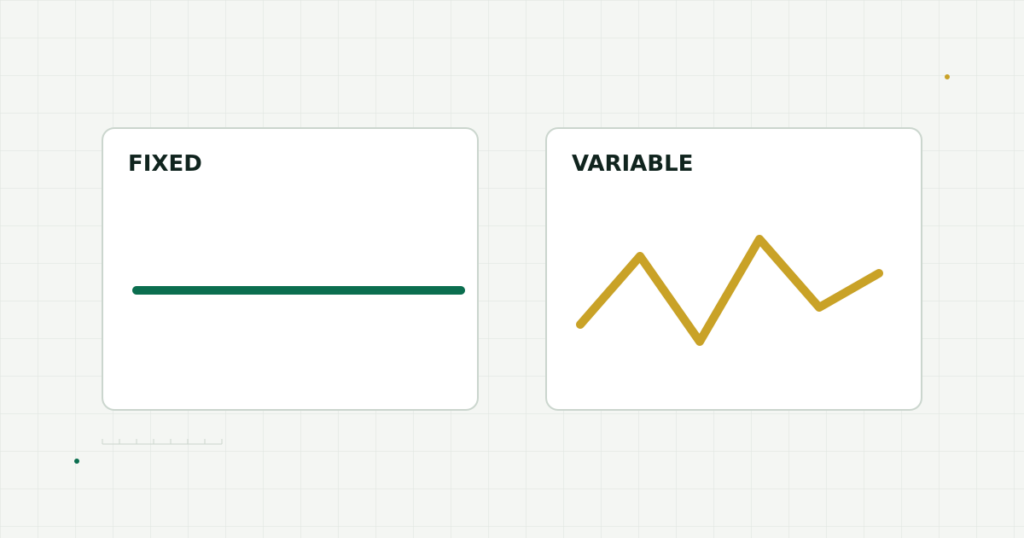
A fixed-rate loan locks your interest rate for the entire term — your payment never changes because of market rates. A variable-rate (or adjustable-rate) loan starts with a rate tied to a benchmark index, and adjusts periodically, up or down, as that index moves.
Why variable rates start lower
Lenders price in uncertainty. Since a variable rate can rise later, they typically offer a lower starting rate to compensate for the risk you’re taking on. That gap can be substantial — sometimes a full percentage point or more in the first few years.
When fixed rates win
- You plan to stay in the home/keep the loan for the full term (10+ years)
- You want predictable payments for budgeting
- Rates are currently low and expected to rise
When variable rates win
- You plan to sell, refinance, or pay off the loan within the initial fixed period (often 5–7 years on a hybrid ARM)
- You want the lowest possible payment right now, even with future risk
- Rates are currently high and expected to fall
A quick way to compare
Take the monthly payment difference between the two offers and multiply it by the number of months you realistically expect to hold the loan. If the fixed rate’s extra monthly cost, summed over that period, is smaller than the potential rate increase risk on the variable loan, fixed is usually the safer bet.
Run both scenarios side by side with our Loan Payment Calculator before you sign anything — seeing the real numbers next to each other makes the decision far less abstract.