Compound interest gets called “the eighth wonder of the world” so often it’s become a cliché — but the math behind that reputation is genuinely worth understanding, because it changes how you think about saving even small amounts.
The basic idea
Simple interest earns you a return only on your original amount. Compound interest earns you a return on your original amount plus every bit of interest you’ve already earned. Over time, your money starts earning money on its own earnings — that’s the “compounding” part.
The formula
A = P(1 + r/n)nt
- A — the future value
- P — your starting principal
- r — annual interest rate
- n — number of times interest compounds per year
- t — number of years
A real example: $500 a month
Say you invest $500 a month at a 7% average annual return (a common long-term stock market assumption), compounded monthly:
- After 10 years: roughly $86,500 — of which about $26,500 is growth, not your own contributions
- After 20 years: roughly $260,000 — over $140,000 of that is growth
- After 30 years: roughly $610,000 — more than $430,000 of that is growth
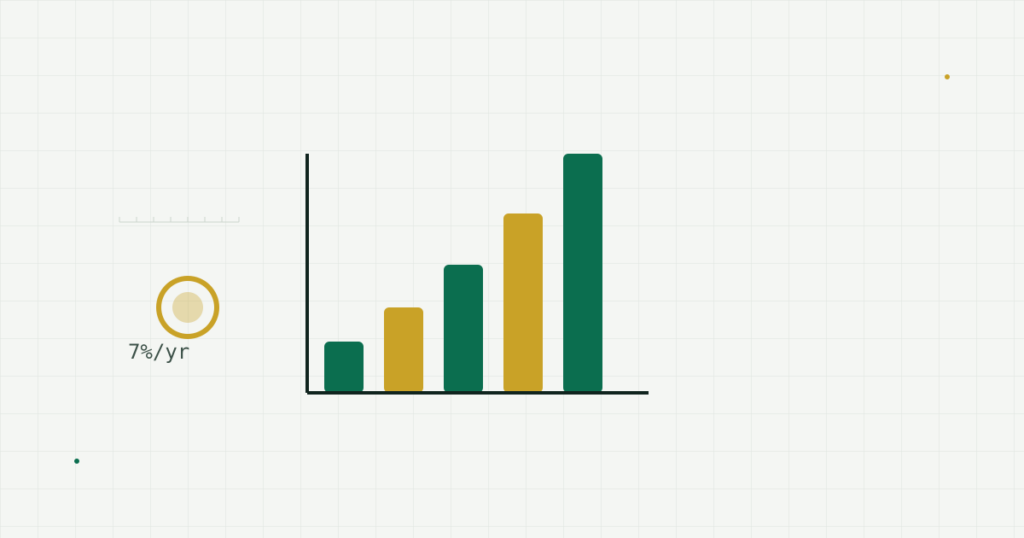
Notice how the growth accelerates disproportionately in the final decade. That’s compounding doing its job — the earlier you start, the more those last years benefit from decades of prior growth.
Why starting early matters more than starting big
Someone who invests $300/month starting at age 25 will typically end up with more money at retirement than someone investing $500/month starting at age 35 — purely because of the extra decade of compounding. Time in the market consistently outweighs the size of individual contributions.
Want to see what your own numbers look like? Our Compound Interest Calculator lets you test different contribution amounts, rates, and timeframes in seconds.