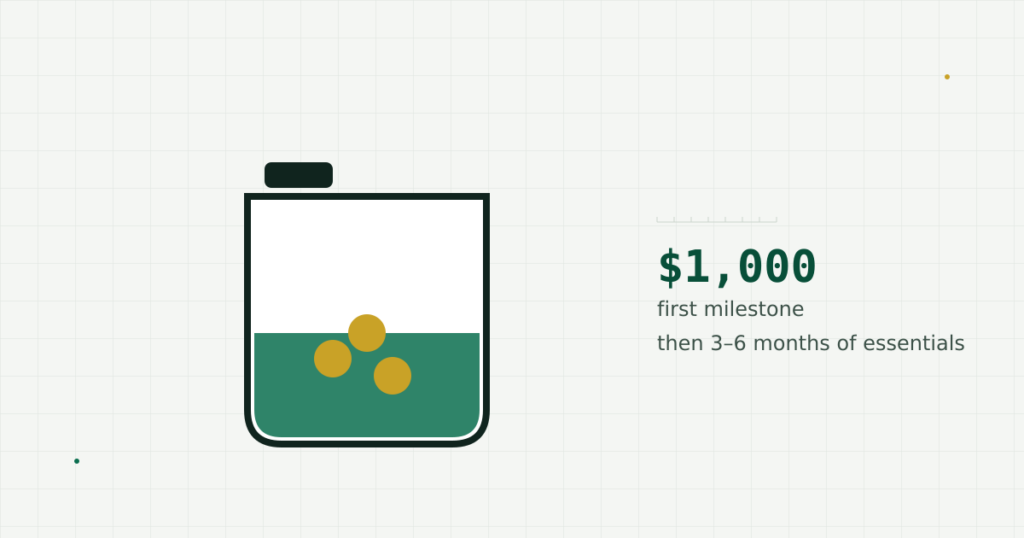
“Save 3 to 6 months of expenses” is common advice — and also, for a lot of people, deeply unhelpful on its own. Here’s a more concrete plan for actually getting there.
Step 1: Calculate your real target
Don’t use your income — use your essential monthly expenses: rent/mortgage, utilities, groceries, insurance, minimum debt payments, transportation. Skip discretionary spending like dining out or subscriptions; in a true emergency, those get cut first anyway. Multiply that essentials number by 3 (if your income is stable) or 6 (if it’s variable or you’re the sole earner).
Step 2: Start with a smaller milestone
A full 3–6 month fund can feel so far away that people give up before starting. Instead, aim for a first milestone of $1,000–$2,000 — enough to cover most single unexpected expenses (a car repair, a medical bill) without going into debt. Hitting that first goal builds real momentum.
Step 3: Automate a fixed amount, not “whatever’s left”
“I’ll save what’s left at the end of the month” rarely works, because there’s rarely anything left. Instead, treat savings like a fixed bill: set up an automatic transfer of a specific amount — even $50–100/month — right after payday, into a separate account you don’t touch.
Step 4: Use a high-yield savings account, not your checking account
Emergency funds need to stay liquid (accessible within a day or two), but that doesn’t mean they should earn 0%. A dedicated high-yield savings account keeps the money separate from everyday spending while still earning meaningful interest — a modest form of compounding working in your favor while you save.
Step 5: Know when to pause other goals
It’s reasonable to pause extra debt payments or investment contributions while building your first $1,000–$2,000 emergency milestone — an emergency fund is what keeps a bad month from turning into new debt in the first place.
A realistic timeline
Saving $200/month, a $2,400 first-year milestone is realistic for most budgets. A full 3-month fund of essential expenses typically takes 12–24 months for most households — and that’s normal. The goal is steady progress, not speed.
Use our Savings Goal Calculator to see exactly how many months it’ll take to hit your specific target at your own contribution rate.